


July 21, 2026
Gelareh Keshavarz: Prominent Leader in Change Management, Professional Development, & Assessment


Subscribe
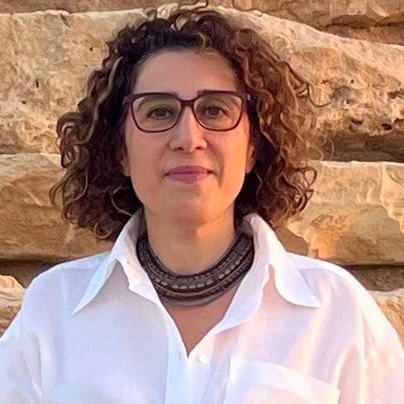
Gelareh Keshavarz has worked in the field of education for more than 20 years. She currently serves as President of the Athabasca University Graduate Students’ Association (AUGSA), leading governance, policy engagement, and organizational strategy in partnership with university leadership. She also serves as an appointed member on the Athabasca University Board of Governors, contributing to institutional oversight, strategic direction, and fiduciary responsibilities. Her work sits at the intersection of higher education leadership, digital learning, and change management, with a focus on strengthening organizational capability, expanding access, and enabling institutional transformation.
She holds a Bachelor of Arts in English Literature and Translation from Azad University (IAU), completed the coursework for a Master of Arts in English Language Teaching at the University of West London (all requirements except the dissertation), earned an Advanced Business Diploma in Business Studies from the School of Law and Social Science (UK), a Diploma in Further Education Teaching from The University of Cambridge, and a Master of Education in Open, Digital, & Distance Education from Athabasca University. She is currently a Doctor of Education candidate in Distance Education at Athabasca University.
Gelareh describes herself as a student, a student leader, and a board member, making governance a central part of her day-to-day work and expertise. This combination of roles shapes how she views assessment. She approaches the field as both a researcher and an experienced educator, examining how generative AI (GenAI) is changing what our assessments actually measure, and how we measure learning.
Her research explores how higher education faculty who work in more than one language, with English not being their dominant language, are experiencing GenAI in their daily work. Through in-depth interviews, she seeks to understand what has actually changed for them. A consistent concern emerges: GenAI produces work that appears polished and complete, leading people to stop questioning it. As a result, the thinking process is often overlooked, even though the final product appears sound.
To quote Gelareh, her goal is “to bring attention to that tension without falling into binary thinking. Arguing over whether GenAI is good or bad gets us nowhere. I’m interested in hybrid education, where humans and GenAI work best together, and where we talk openly about what we gain and what we lose. What I care about is embedding GenAI well in the design of learning and assessment, so that educators build real capability and agency. A simple example is asking students to disclose how GenAI worked in their context and in their process, so the thinking along the way becomes part of what we evaluate.”
Discussing the value of large-scale online assessment, Gelareh explains that she studies and works at a fully online university, and her doctorate is in distance education, so she sees the value every day.
“Online assessment is what lets a nurse in a small town, an architect changing careers, a parent studying at night, or a student on another continent earn a credential that counts. It removes the requirement to be in a certain room at a certain time. That matters for fairness. My caution is that GenAI is putting new pressure on what these assessments can tell us. If a test only checks the final answer, GenAI can produce that answer. So, the value is real, but the design has to keep up.”
Gelareh believes that the future of assessment is in assessing the learner’s process. As she explains, “This means designing tasks where learners show how they worked with GenAI, what they accepted, what they rejected, and why. It also means building critical GenAI literacy, or GenAI agency as I like to call it: knowing how to use the tools and, more importantly, knowing when to doubt them. One educator in my study put it well. She said she doesn’t trust GenAI any more than she trusts her stove. Knowing how to turn it on is one thing. Judging whether what you cooked is safe to serve is another. That judgment is what our assessments should protect.”
In terms of digital assessment, Gelareh explains that many of her colleagues in mathematics had spoken highly about Vretta for years, so she was familiar with the organization and was aware of its strong reputation in the field and across Canada. She met Anand Karat while serving on the board of directors at the Canadian Network for Innovation in Education (CNIE). She was impressed by his work ethic and leadership style, particularly his ability to bring people together around a shared purpose, long before she realized he was the CEO of Vretta. In her words, “That’s how I met him, and we decided to work together. I’m still getting to know the platform itself, but I came to it through people whose work I respect.”
It was through her connection with Anand and her role at CNIE that Gelareh was invited to serve as Conference Ambassador for Canada – Post-Secondary Institutions for the 51st Annual International Association for Educational Assessment (IAEA) Conference, to be held in Toronto, Canada, from September 27 to October 2, 2026. The conference is hosted by the Education Quality and Accountability Office (EQAO) in collaboration with its technology partner, Vretta. You can learn more about the conference on the conference website: https://www.eqao.com/iaea-annual-conference.
Gelareh is an accredited change management professional, and consulting is a significant part of her work. Her focus is on professional development and assessment, and a common thread runs through everything she does: building agency and capability in people. She believes that tools and policies deliver meaningful results only when the people behind them grow as well.
Drawing from what she has learned over 20 years is that change only happens at the speed of trust. According to Gelareh, “You can buy the technology and write the policy, but change for compliance is not sustainable. People go back to old habits the moment no one is watching. In organizational learning this is called single-loop versus double-loop learning. Compliance only changes the action. Real change happens when people question the assumptions behind the action, and that only happens in a climate of trust.
When institutions invest in something new and don’t see the return, the missing link between investment and return on investment is almost always change management. That’s the work I love. Because of my governance experience, I also work with boards and senior leaders. Right now, a lot of that work is helping education organizations think through how GenAI is changing what people do and what the tool does, and how to draw that line in a way that protects human capability and agency.
One thing that shows up in my research is how some leaders rise from the bottom up. They pick the area they care about, build their expertise in it, and start leading others without any formal leadership title. Policies and formal structures often lag behind technology, so this kind of leadership is where real change starts. Part of my consulting work is helping organizations notice these people and give them room to lead.”
Regarding what she is most proud of in her career, Gelareh says, “I’m not sure I’d point to a single award or title. The moments I’m most proud of are when I really connect with people and they trust me enough to talk candidly about the real problems of practice, or the real challenges around a governance table. Then we put our expertise and experience together and solve something. Sometimes that happens in a short Zoom call. Sometimes it takes a long international project. Either way, that’s the work I celebrate. At heart I’m a connector and a collaborator, and I measure my career by those moments.”
When asked about what she likes to do away from her professional responsibilities, Gelareh responds: “Nothing super exciting! I take breaks between everything I do, and in those breaks I cycle and swim. My family is spread all over the world in different time zones, so keeping in touch with them is a constant part of my life, and honestly a hobby in itself. And I travel a lot for work and study, which I enjoy. The truth is, I become interested in whatever task is in front of me and find a way of enjoying it.”