


November 30, 2026
Building Trust Together: Reflections on IAEA 2026


Subscribe to Vretta Buzz
Key Topics Covered
Welcoming the Global Community
Honouring Our Land and Its People
Looking Ahead to Thessaloniki, Greece
A First for Canada
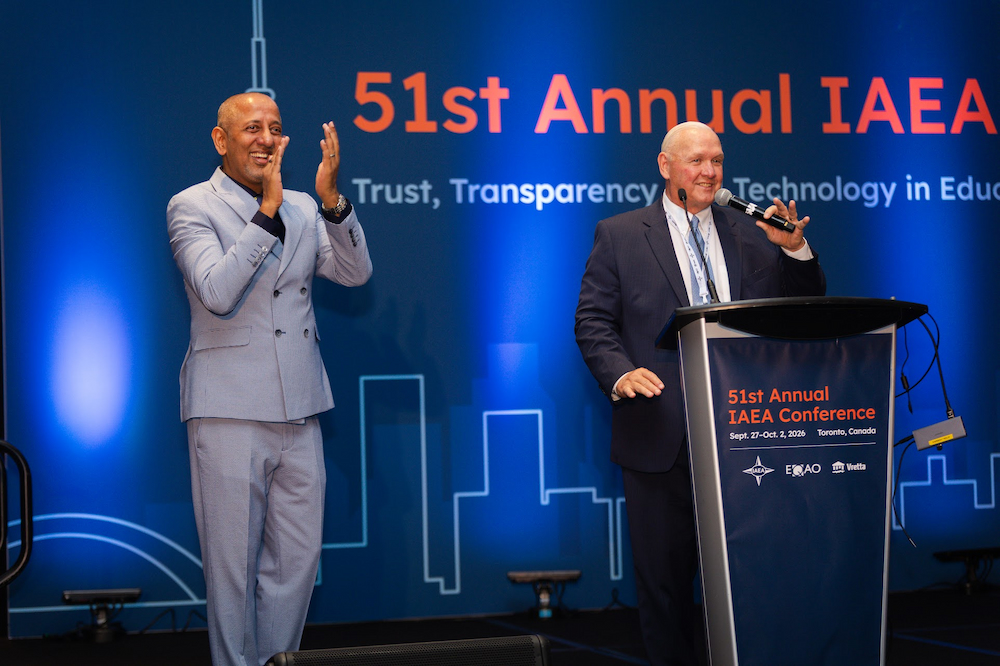
For six days this fall, Toronto became the gathering place for the world’s educational assessment community. From September 27 to October 2, 2026, the International Association for Educational Assessment (IAEA), a global non-profit founded in 1975 with members from more than 50 countries, held its 51st Annual Conference in Canada for the first time. EQAO was proud to host the conference, with Vretta serving as supporting partner.
Hosting the conference was more than an opportunity to welcome colleagues from around the world. It reflected Ontario's growing role in conversations about large-scale assessment modernization, digital delivery, public accountability, and the use of technology to support high-quality educational measurement. The conference provided a unique opportunity to share Ontario's experience while learning from jurisdictions facing similar challenges and opportunities. Additionally, it was a chance to give back to the global assessment community and to support the conversations shaping the future of our field.
Our theme was Trust, Transparency and Technology in Educational Assessment. We chose it because those three ideas now shape every decision our field makes. New technologies are changing how assessments are designed, delivered and scored. Students, families and governments rightly expect results they can understand and rely on. These themes are not abstract concepts. They underpin our ongoing work to modernize provincial assessments, strengthen accessibility and inclusivity, communicate results in ways that support learning, and ensure that innovation is accompanied by rigorous evidence and public confidence.
Welcoming the Global Community
With IAEA 2026, Canada joined a long line of countries that have hosted the conference. Over the past five decades, the annual conference has been held on six continents, in countries such as Zambia, the USA, Jamaica, Mexico, Azerbaijan, the United Kingdom, Georgia, South Africa, Singapore, Israel, Kazakhstan, the Philippines, Thailand, Australia, Nigeria, China (Hong Kong), Brazil and Slovenia.
This year, it was our turn to welcome the global assessment community to Canada, and 400 delegates from 40 countries joined us in Toronto. At the opening ceremony, we welcomed delegates on behalf of EQAO and Vretta, alongside the Honourable Paul Calandra, Ontario’s Minister of Education; Chris Day, Chair of EQAO’s Board of Directors; and Dr. Mafu Rakometsi, IAEA President and CEO of Umalusi.
Delegates represented ministries of education, assessment agencies, examination bodies, universities, research organizations and assessment solution providers. Together, they brought a rich range of experience, perspectives and education systems to every conversation.
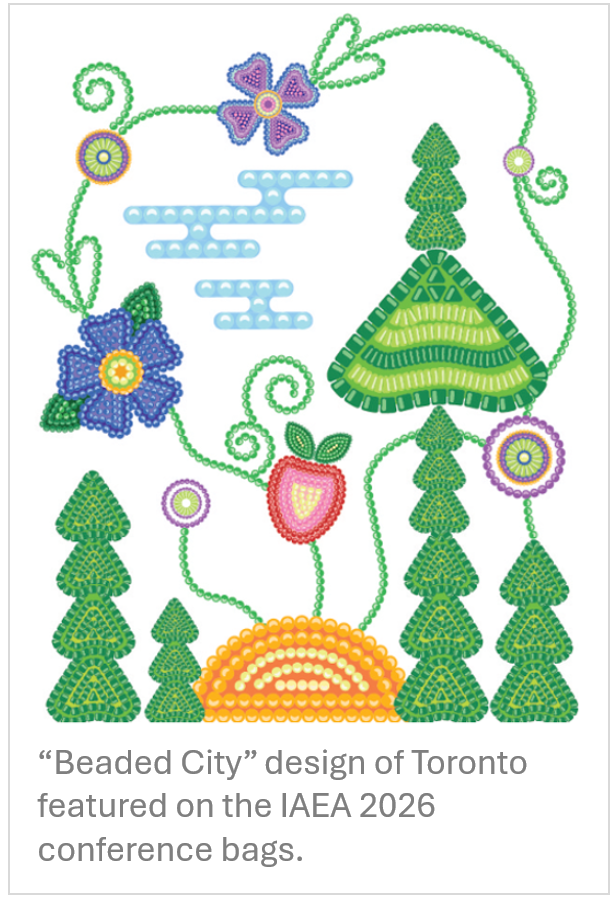
That spirit of connection was captured on every delegate’s conference bag in “Beaded City,” a design by award-winning Indigenous designer Katie Wilhelm. It reimagines the Toronto skyline as trees and flowers in a digital beadwork style. The green vines linking them are traditional Indigenous spirit lines, natural pathways of connection, much like the knowledge, trust and ideas shared among delegates throughout the week.
Honouring Our Land and Its People
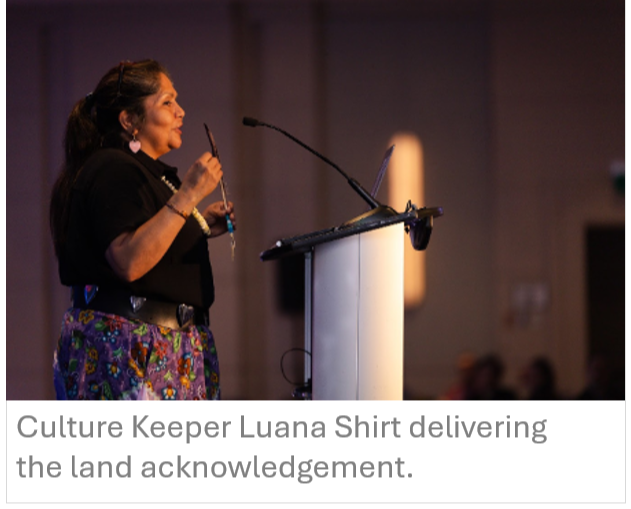
We wanted delegates to experience Canada, not just visit it. The opening ceremony began with a land acknowledgement and the guidance of Culture Keeper Luana Shirt, a Plains Cree–Anishinaabe kwe born in Treaty 6 Territory and raised in Toronto. Her work centres on Indigenous language, women’s health and wellness, the arts and traditional medicines.
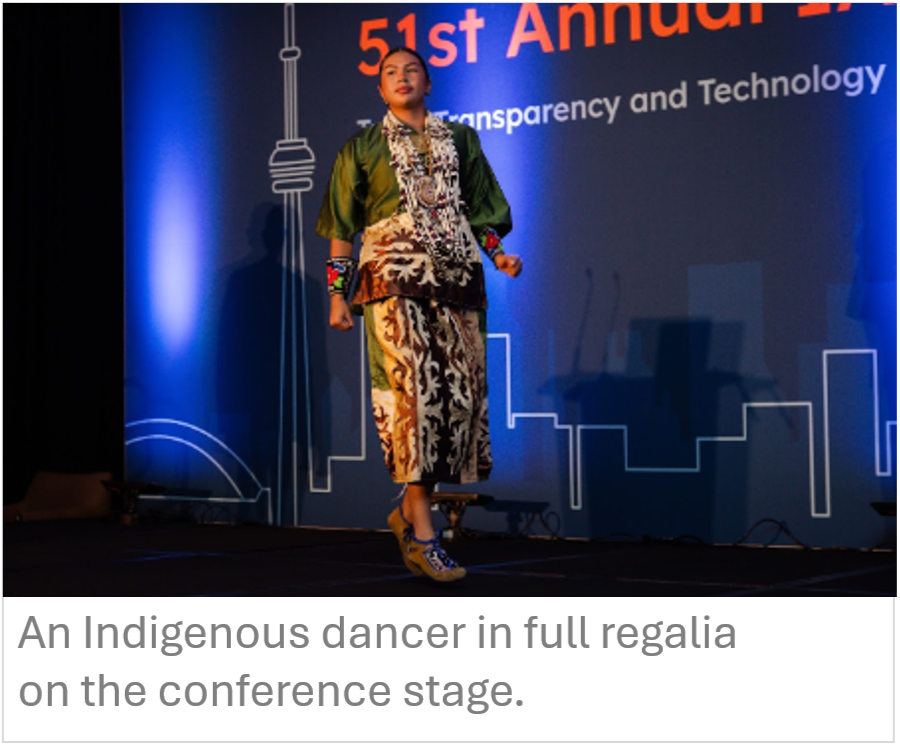
Delegates were also treated to the performance of a dancer in full regalia who brought Indigenous stories to life through movement and music. Held on the first full day of the conference, the performance offered a powerful welcome to delegates from around the world and a moving reminder of the living cultures and traditions of the land on which we gathered.
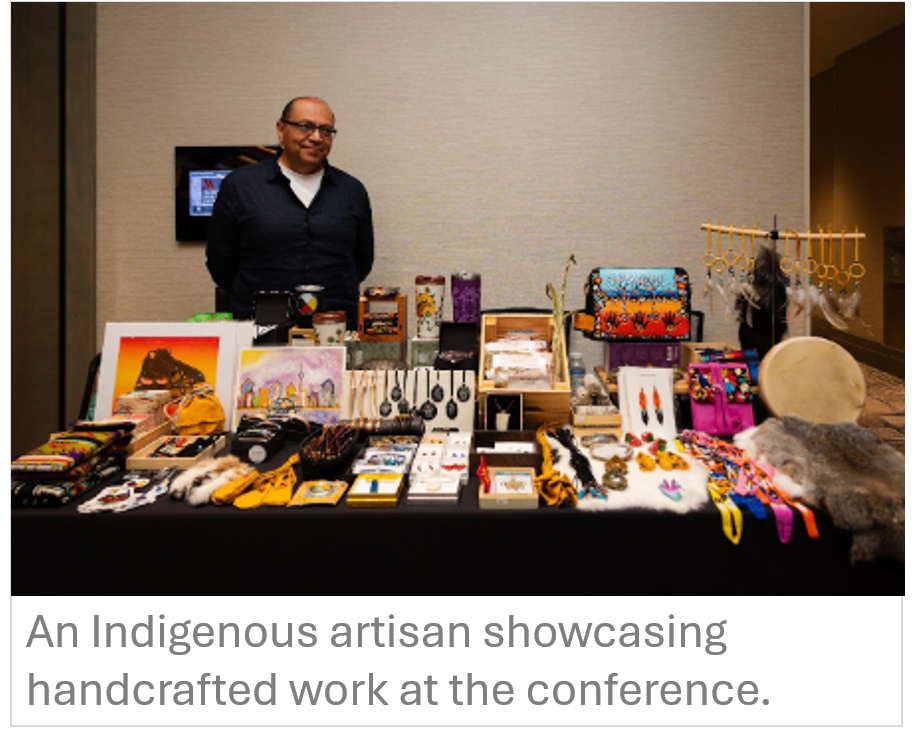
Six Indigenous artisans and businesses hosted stalls throughout the week. Delegates could meet the makers, hear the stories behind their work and take home a piece of Indigenous craft. With new artisans joining on different days, the stalls offered beadwork, jewellery, ornaments, clothing and body care products, giving delegates a chance to support Indigenous entrepreneurs directly.

Every delegate also received an Orange Shirt Day pin to wear on September 30, Canada’s National Day for Truth and Reconciliation. The day honours Indigenous children who were forced into residential schools, along with survivors and families still healing today. The pin features artwork by Indigenous artist Clayton Gauthier depicting a Mother-Caretaker and Child, a symbol of love, protection and family, and reflects our shared commitment that Every Child Matters.
Ideas That Shaped the Week
Over the week, 186 presenters led workshops, keynotes, sessions, panels and poster presentations (click here to view the program). Technology drew the most sessions (61), followed by transparency (48) and trust (36). The single busiest topic was AI and machine learning in assessment design and scoring, with 31 sessions. The three ideas also overlapped: 33 sessions spanned more than one subtheme, and 16 addressed all three. Throughout the week, delegates expressed interest in Ontario’s experience with digital assessment and our efforts to balance innovation with reliability, accessibility and transparency.
Our four keynote speakers set the agenda for each day:
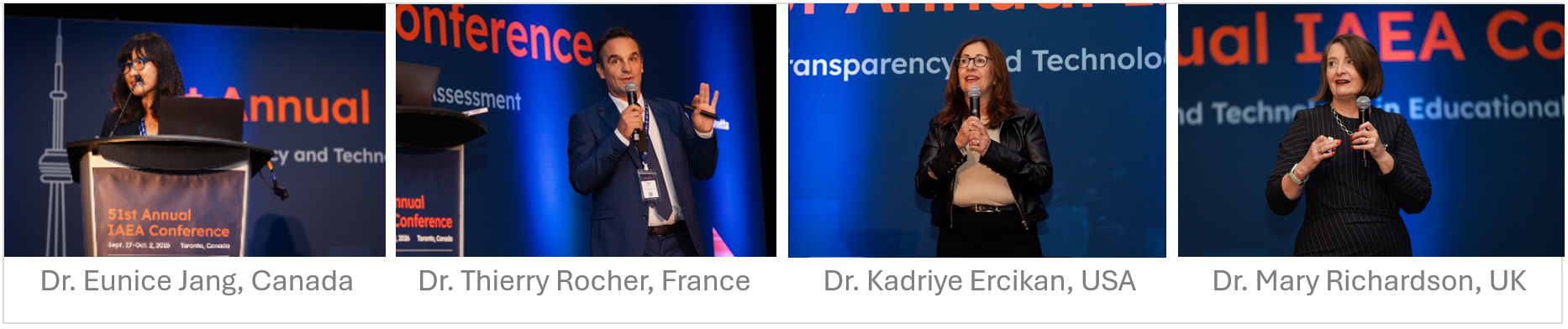
Dr. Eunice Eunhee Jang (OISE, University of Toronto), "Reimagining Assessment in the AI Era." She explored how the classic assessment triangle can be situated within a wider assessment ecology of learners, educators, AI systems, institutions and policy.
Dr. Thierry Rocher (DEPP, French Ministry of Education), "Assessment: The Metrologist, the Messenger, and the Guide." He reflected on three roles that people working in assessment must play: measuring well, delivering results even when unwelcome, and helping others act on them.
Dr. Kadriye Ercikan (ETS and NCME), "Measurement at a Crossroads." She examined how AI is putting validity, fairness and comparability under new pressure, and why its benefits must be demonstrated rather than assumed.
Dr. Mary Richardson (UCL Institute of Education), "Trusting Times?" She explored trust and confidence in assessment, and the importance of clear public communication about it.
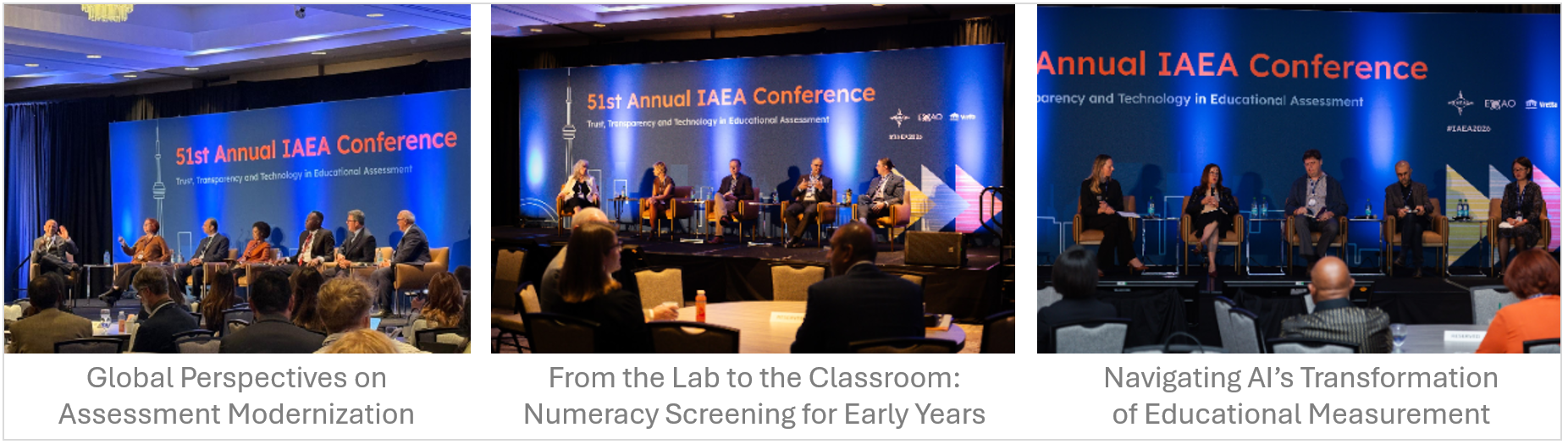
Three panel discussions brought together voices from government, research, classrooms and industry to test the conference theme against real-world experience.
Monday: “Global Perspectives on Assessment Modernization.” Leaders from Canada, South Africa, the Caribbean, Pakistan and the USA discussed how to modernize assessment while protecting public trust.
Tuesday: “From the Lab to the Classroom.” Researchers from Carleton University, Canadian educators and Vretta discussed how they turned EMA@School, a paper-based early numeracy screener, into a digital tool.
Thursday: “Navigating AI’s Transformation of Educational Measurement.” Leaders of the National Council on Measurement in Education (NCME) discussed how to use AI responsibly in educational measurement.
Bringing the World Together
Bringing a global community to Toronto started long before the conference commenced, and continued well after each day’s sessions ended.
Conference Ambassadors
We began by appointing 11 conference ambassadors to represent regions across Africa, Asia, Europe, the Middle East and the Americas. They shared conference details through their networks, identified keynote speakers and sponsors in their jurisdictions, represented IAEA 2026 at educational assessment events around the world, and supported delegates through their journey to Toronto. Along the way, they also championed one another through profile articles and a podcast interview series.
Presenter Spotlight
Our social media campaign carried that momentum forward. Launched at IAEA 2025 in Zambia, it ran for a full year on LinkedIn, with IAEA, EQAO, Vretta and our ambassadors sharing keynote and sponsor spotlights, key deadlines and news from partner events such as ATP, NCME, eAA, and FLIP+. In the final weeks, we featured every presenter and presentation. These posts were widely shared and gave presenters visibility for their work before they arrived in Toronto.
Connecting Beyond the Sessions
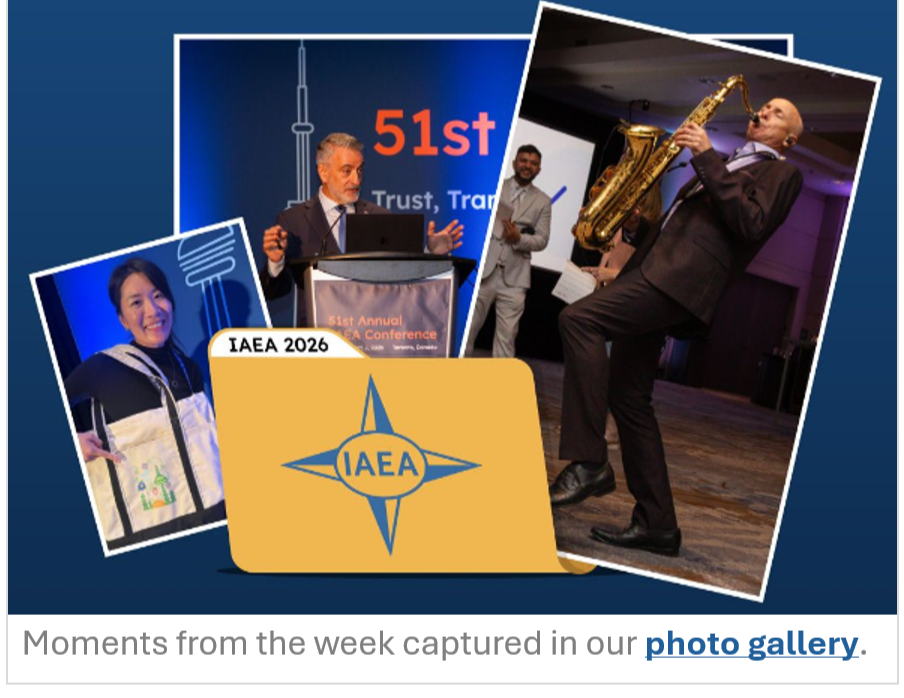
Once delegates arrived, we made sure there was time to connect. Each day’s program ended early enough for delegates to explore Toronto. Every evening brought people together through a welcome reception on Sunday, the Vretta boat cruise on Monday, the NCME reception on Tuesday, and the IAEA gala dinner on Thursday. On Wednesday, delegates set the program aside for a full-day excursion to Niagara Falls and Niagara-on-the-Lake, complete with a boat ride to the base of the falls and a classic Canadian BeaverTails pastry. View the full IAEA 2026 photo gallery here.
Thank You
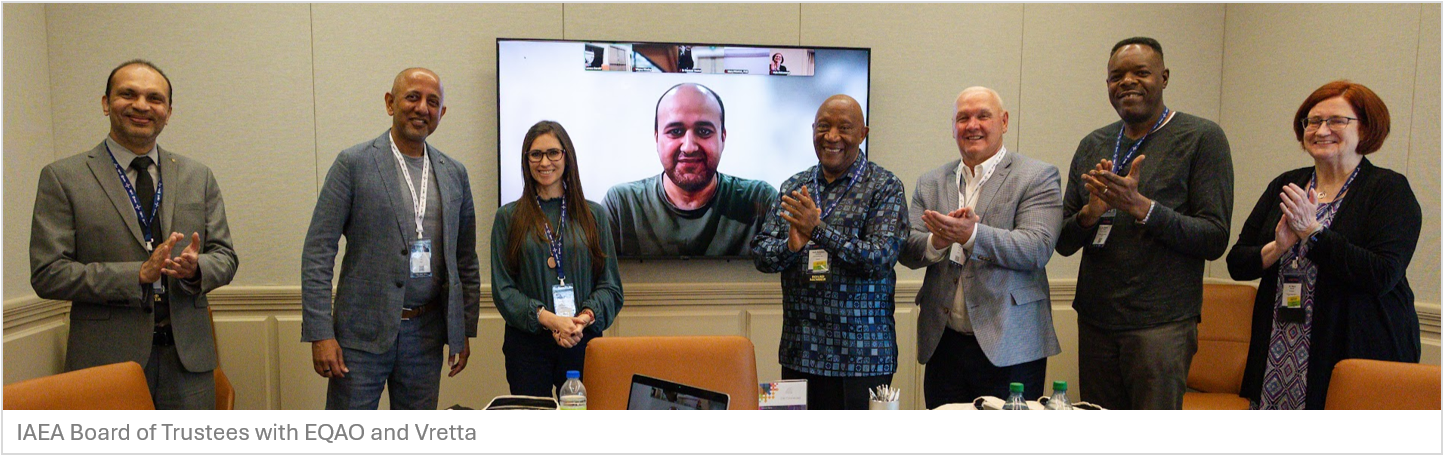
A conference of this size is the work of many hands. We thank the IAEA Board of Trustees, led by President Dr. Mafu Rakometsi, for their guidance and trust. We thank the steering and organizing committees, conference managers and members of the Scientific Review Committee. We are grateful to our conference ambassadors and to the Marriott team for their commitment and support throughout our journey in hosting this conference.
We also thank our 21 sponsors, whose support at every level made the conference possible. Most of all, we thank every presenter and delegate for the knowledge, curiosity and friendship they brought to Toronto. They were the true heart of IAEA 2026.
Looking Ahead to Thessaloniki, Greece
Hosting IAEA 2026 demonstrated that the challenges facing educational assessment are increasingly global. Whether the focus is AI, digital transformation, public confidence, accessibility or fairness, assessment organizations are grappling with many of the same questions. The conversations in Toronto reinforced the value of international collaboration in addressing these shared challenges.
Toronto continued a journey that took IAEA to Livingstone, Zambia, in 2025. The next stop is Greece. The 52nd Annual IAEA Conference will take place from October 3 to 8, 2027, at the Grand Hotel Palace in Thessaloniki, under the theme "Measuring What Matters: New Competencies for a Changing World."
The questions we raised in Toronto will travel with us. How do we use AI without losing sight of validity and fairness? How do we make our methods open enough to earn public trust? We look forward to continuing that conversation in Thessaloniki. Details are available here.
About the Authors
Dan Koenig (LinkedIn) is the CEO of Ontario’s assessment agency, EQAO (Education Quality and Accountability Office). Under his leadership, EQAO's research and assessment programs have earned international recognition for their contribution to large-scale student assessment, including multiple awards from the e-Assessment Association (eAA).
Anand Karat (LinkedIn) is the CEO of Vretta, an award-winning assessment technology provider. Under his leadership, Vretta has been instrumental in modernizing large-scale summative and formative assessment solutions, with a strong focus on equity, trust and accessibility, for ministries of education, assessment agencies and regulatory bodies across Canada and Europe.